Women’s Singles: From Chinese monopoly to the most competitive discipline in badminton.

By Aakash Joshi

Screenshot courtesy BWF

My first memory of watching badminton was as a young kid at my uncles’ house. It was the 1999 World Championship final between DAI Yun and Camilla Martin; sensationally the Dane scored a rare victory in a sport dominated by Chinese players. Martin was the first woman to consistently challenge this. In 2000 at the Sydney Olympics, it was Martin who was fighting the Chinese dominance of women’s singles. She battled GONG Zhichao in the final but had to settle for Silver. In Athens 2004 I distinctly remember the match between Mia Audina and ZHANG Nin won by the Chinese athlete in the third set after losing the first. So, my earliest recollections of women’s singles is a sector where China was the superior force.

Fast forward to the 2008 Olympics. I was in class 9 when I watched Beijing’s grand opening ceremony and started to understand the gravitas of the Games. I heard about Saina Nehwal – a young 16-year-old  from Hyderabad – I remember that third round match against WANG Chen. No Indian player had reached beyond round of 16 in Olympics and here she was, defeating a world top 5 player in three sets. I was curious. I started watching other matches to see if she could win a medal. I prayed that Saina should get Yulianti and avoid Tina Baun. Yes, Saina Nehwal did get Indonesia’s Maria Yulianti in the QF. It was a real rollercoaster of a game. Saina won the first set in extra points, lost set 2 easily and had a lead of 11-3 in final but it was not to be, and she lost  21-15 in the end.

It was the era of “Saina versus China,” and I followed her progress everywhere. I saw her winning the first prestigious super series 2009 in Indonesia – in front of a crazy Istora Senayan – defeating another Chinese player WANG Lin over 3 sets. Then came the Hyderabad world championship: Saina reached the QF but on this occasion lost to WANG Lin.

It was 2010 and Saina was flourishing. She won 2 SuperSeries tournaments (India Open & Singapore Open), retained her Indonesia Open title and had made it to world #2. Although seeded 2 for the Paris World Championships, she lost in the QF, this time to Chinese WANG Shixian in two straight games. Her focus was shifting to her first multi sporting event – the Commonwealth Games in Delhi. I saw her winning that gold medal from WONG Mew Choo of Malaysia in three hard fought sets. It was a momentous day for Indian badminton.

China dominated the 2011 World Championships winning all five gold medals. Saina expected to do well in London but lost in the quarters again to the Chinese:  this time it was tricky WANG Xin who annihilated her in two games. I saw the brilliance of ZHAO Yunlei winning two medals: a gold and a silver. ZHAO for me is one of the greatest players of all time – the only player to have won two Golds at the same Olympics.

London 2012 and Saina arrived in the UK  in superb form with a win at the Thailand Open and a third Indonesia Open victory. She got a straightforward draw until the quarters where she faced tricky Tina Baun. That day she won the first game easily, lost momentum in the second game and I switched off the TV. After 3 minutes I saw the news “Saina in Semis of Olympics games” .  As a fan, that day in  August is a special day in my life. Knowing Saina had a patchy record against the Chinese I still hoped that after breaking the QF barrier she would give a good fight to top seed WANG Yihan like 2011 Super Series  finals, but it was not to be. WANG Yihan had other plans. She was untroubled by Saina in both set s 21-13,21-13. Saina then played bronze medal against WANG Xin. WANG Xin started controlling the pace of the match but soon Saina fought  back. When Wang Xin fell, initially, I thought it was a tactic to take a break, but no, it was seriously injury, and the game was ended by WANG Xin’s retirement. When the greatest badminton player of all time – LI Lingwei – presented the medal to Saina, I could not hold back my tears. ZHAO Yunlei won two Golds (XD & WD) in London, the only player to have achieved this at the same Olympics.

Although China won Gold and Silver in the Women’s Singles in London, looking back it was the last time Chinese athletes dominated that sector. Suddenly, women players from around the world were challenging for the most prestigious honours.

2013 was a watershed year and the World Championships in Guangzhou epitomized this. On grand finals day with 11000 spectators shouting “Jiayou!” to  LI Xuerui,  I thought that the young Ratchanok would falter but it was not the case: she was trailing 19-12 but played a net shot to force a lift from LI X. It was just out at the back line and the deceptive Thai started her show. She won that set 22-20, lost the momentum in the second but in third game she controlled her lead and won the match 21-14. On the biggest stage China lost the gold medal to a young Thai girl.

That triumph provided the headlines but if we look a little deeper into the tournament there were other signs that China’s supremacy in WS was being dispelled. P V Sindhu defeated two Chinese opponents back-to-back (WANG Yihan & WANG Shixian) to clinch Bronze; now she has gone on to win a total of five World Championship medals. The stand-out QF for me was the thrilling match between Ratchanok and Carolina Marin. The young Marin lost in three tight sets but has gone on to win the tournament three times, as well as numerous Superseries events and 2016 Olympic Gold.

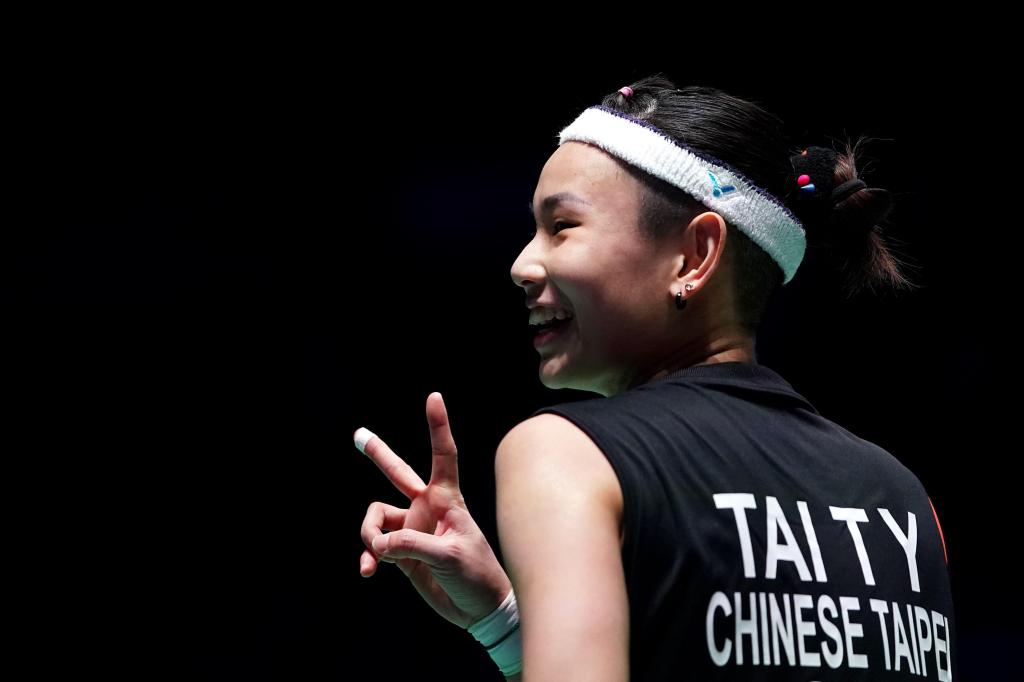
I have watched greats come and go. I saw the utter dominance of China but the 2013 World Championships and the arrival of Ratchanok, Carolina Marin and Sindhu changed the landscape of Women singles. Later that year an unseeded 16 year-old became the first Japanese woman athlete to win the Japan Open. Akane Yamaguchi stunned the world with her victory over the up-and-coming TAI Tzu Ying; now she is reigning two times World Champion and TAI Tzu Ying has held the World #1 spot for Taiwan for longer than 200 weeks.

Badminton in Women singles is no longer China vs China. Over the past few years, it has become the most diverse group among all 5 disciplines. However, with CHEN Yu Fei winning Gold at the Tokyo Olympics, HE Bing Jao an ever present top ten player and the rise of WANG Zhi Yi and HAN Yue it is arguable that the fightback is on, and the Chinese team are trying their best to reclaim their dominance.


Follow Aakash on Twitter for more Badminton analysis @Badminton1993


If you enjoyed this take a look at this article about Saina Nehwal https://womensbadminton.co.uk/2019/10/08/indias-saina-nehwal-trailblazer-legend/

©2025

Amanda Bloss All Rights Reserved
Uber Cup 2022 Preview

A spectacular lineup of the top women players will be contesting the Uber Cup in Thailand. There are mouthwatering head-to-heads promised as 16 teams chase their dream of winning the Uber Cup. Can anyone stop China from keeping hold of the trophy for another 2 years?

Just like the Thomas Cup this tournament begins with a Round Robin. The top 2 from each pool of four then progress to the Death or Glory knockouts.

Group A: Japan, Indonesia, France, Germany.

Akane’s regeneration since the Olympics has been dazzling; now she has rediscovered her joy at simply playing badminton and with this squad I would expect the Japanese team to dominate all their encounters in group A. Once they get past this stage though, they will be tested. A fully fit Nozomi is one of the best players in the world but lately there are question marks around her recovery from recent injuries. In doubles FukuHiro are back and should be able to hold their own along with NagaMatsu. The athlete who potentially can provide the special ‘something’ for this team is Misaki Matsutomo. Currently with the team as a refugee from XD, her touch and vision could make the difference when the pressure is on. I still feel a gnawing regret that she is no longer full-time in the WD sector. As she has made the trip to Bangkok the implication is that she will be part of a scratch pair.

The puzzle in this group is who will come second. Indonesia has sent some of its lesser known players who are unlikely to go further. Germany’s players had an excellent European Championship, so this points to progress to the quarter finals ahead of France.

Group B: China, Taiwan, Spain, Australia.

This group holds the possibility of some fabulous ties. WANG Zhi Yi could be seen as China’s WS3 but her recent triumph over Akane in the singles final at the Badminton Asia Championships has highlighted what a talented player she can be. Along with new-look HE Bing Jiao, CHEN YuFei and in WD CHEN Qing Chen/JIA Yi Fan China’s athletes must be optimistic that they will be unbeaten through the entire tournament.

The battle for second place must be between Taiwan and Spain – both teams with an iconic singles player at their head. Carolina is back after her second major injury layoff and although she won the title at the European Championships she is 20% off her best. That still means she is an exceptional player, but she needs games to fine tune her net play and to eliminate mistakes. Rumours are swirling around that she wont be playing at all; she’s sitting out the first tie against Taiwan so after that we’ll have to wait and see. TAI Tzu Ying should be able to lead Taiwan to second place but the heavy-lifting of progress is going to come down to the desire and tactics of teammates of both superstars.

Group C: Thailand, Denmark, Malaysia, Egypt.

Thailand are in a tough group but if they can win it they must fancy their chances of a semi-final or better. In WS May and Mew along with Busanan are capable of great wins; in WD Prajongjai/Kitithatakul will face tough games against Denmark and Malaysia and these results could be crucial to their progress. I wish Popor was part of their squad.

It’s hard to write off Malaysia against Denmark for second spot. The Danes have the edge in singles, but doubles is more even. Analysts are favouring the Europeans, but Malaysia has talent; if they get their winning momentum then they could get through.

Group D: Korea, Canada, India, USA.

Korea must be strong favourites with their foundation of exceptional WD blended with AN Se Young in singles. None of the other 3 in this group will be able to equal them so once again the debate will be around who can come second. I’m hesitant about the Indian team; some of the selection decisions were controversial and it’s arguable that they have subsequently had no luck regarding injuries. Of course, PV Sindhu is one of the best singles players in the world, but she cannot win the trophy singlehanded. It’s so disappointing that the duo of Treesa Jolly & Gayatri Gopichand Pullela who were brilliant at the All England this year have had to withdraw. Canada’s team can challenge because they have a balance of good quality singles and doubles, and perhaps a bit more depth.

Conclusions

China must be confident that they can defend this trophy as they just ooze all-round quality. However, sport can be unpredictable and the Japanese team could upset Chinese hopes so long as they are all playing to their maximum. There’s so much to look forward to in this tournament including Group B H2H between TAI Tzu Ying and CHEN YuFei, Misaki guest-starring in Women’s Doubles, and – as usual – Nozomi cheerleading from the sidelines with the rest of BirdJapan by her side. It’s going to be great!


If you enjoyed this then take a look at my Thomas Cup preview here https://womensbadminton.co.uk/2022/05/05/thomas-cup-2022-preview/ or my recent article about TAI Tzu Ying here https://womensbadminton.co.uk/2022/03/02/tai-tzu-ying-at-the-all-england/

Images courtesy BWF and Alamy.


©2025

Amanda Bloss All Rights Reserved

The Olympics: Men’s Doubles Preview

When the going gets tough, the tough get going!

I am anticipating badminton extraordinaire.  The quality of this competition is outstanding with huge expectations of some players.  Athletes from the Asian heartlands of the sport – Indonesia, Japan, China & Taiwan – are likely to dominate the matches but who will triumph at the end is not particularly clear cut.

Pic credit Solomon7/Shutterstock

We haven’t watched most of these pairs in competition with each other for over a year and it will be intriguing to see who have been able to add an extra dimension to their game or who has lost a bit of sharpness.  Realistically most of them are going to need a match or two to kick-start their muscles and focus on victory.  The pairs who adapt to the conditions and negotiate their group games to the knock out stages without expending too much energy or getting injured will have a big advantage. The absence of noisy, partisan crowd is also likely to have an impact on some of the players although I’m at a loss to anticipate whether it will help or hinder.

The competition has 16 pairs but only four are seeded. Each seeded pair heads a group (A,B,C, or D) and the tournament starts with a round robin to determine the top two pairs in each group who will then progress to the knockout stages.

Kevin Sanjaya Sukamuljo & Marcus Fernaldi Gideon

The Minions arrive in Tokyo as World Number Ones and top seeds but they are going to have to play the best games of their lives if they are going to get Gold.  Group A will not allow any slip ups. Challenges to them will come from every direction as the calibre of their rivals is phenomenal.  The venue is expected to be ‘slow’ and they must not allow themselves to get ensnared in an energy sapping smashing competitions. Opponents work hard to blunt their attacks so they must be prepared to reappraise tactics if the game is not going their way. Kevin has one of the best badminton brains in the sport and I’m in awe of his technical skills, superhuman reflexes and sheer desire, whilst Marcus’s strength and chemistry with his partner means the two of them have the weapons to beat everyone.

First they must negotiate their group and it’s vital they fight on their own terms. Their head to head records against their challengers in the first round gives no cause for concern but the reality of an Olympic stage after relative international inactivity for a while means that everyone is a threat. Kevin has brilliance embedded deep and these two would be worthy winners at the end of the tournament. I’m anxious though about their head-to-head record with Endo/Watanabe (2-6) because it seems inevitable that they will end up playing each other in a high stakes game. Prediction: Final

This article considers their chances in more depth https://womensbadminton.co.uk/2021/06/06/kevin-marcus-and-tokyo-gold/

Hiroyuki Endo & Yuta Watanabe

Seeded four this pair are a hazard to Indonesian ambitions. They begin their campaign in Group B and should progress without too much fuss, although Sozonov/Ivanov might be able to ask them some tough questions. Over the last few years they just seem to get better and better. Left-handed Yuta is a dazzling player, his vision and speed are at Kevin levels and this is reflected in their superb head to head record against the Minions (6-2). He is relentless but I often wonder if his threat is diluted by competing in two sectors; I’m fascinated to see how he copes with these demands overlaid by the pressure of a home Olympics. Endo has always been a top player but something about this partnership has liberated him to dream big. Perhaps his stubborn, reliable approach just nicely balances Yuta’s pzazz. Prediction: Final

Hendra Setiawan & Mohammad Ahsan

Could these two nurse their old bones to a Golden final. The day I watched them win on three legs at the All England in 2019 was the day I fell in love with Indonesian badminton. No superlative can do this pair justice but they are consistent winners of the best tournaments including Hendra’s Gold at the 2008 Olympics with his then partner, the late Markus Kido. Nevertheless, in Thailand they were beaten twice by Lee/Wang; they just could not contain the exuberant Taiwanese. At the time it was clear that Ahsan was competing with a dodgy leg so I hope that they have arrived in Japan in good shape. Their rivals in Group D are tough but if they can get the results they need with no injuries then they will be into the next round. Prediction Semi-Final

Lee Yang & Wang Chi-Lin

The most likely challengers for the top spot in Group A are the Taiwanese pair: Lee Yang/Wang Chi-Lin. These two were unstoppable in Thailand, winning three out of three tournaments. I think the most rewarding wins for them must have been against Ahsan and Setiawan in the SF of the Toyota Thailand Open and the WTF. Ahsan was not at 100% but it was clear that the Dads could not live with the Taiwanese muscular approach and it must have been a massive confidence boost to beat such sporting icons. Prediction Semi-Final

Li Jun & Liu Yu Chen

These two have a lot of attacking power and can use their aggression in Tokyo to damage everyone’s dreams. They both move well, have good 3D awareness of the court spaces and can use their height for some steep shots. I think Liu’s netplay will often allow him to gain an advantage right at the start of a rally; he is hard to pass with his long reach and steadfast approach. These two have been restricted to domestic competition since YAE20, and had been in a comparative slump prior to Covid. Maybe this break will have rejuvenated their desire or they could have added some refinements to their tactics. The current status of all the Chinese competitors is difficult to analyse because we haven’t been able to watch them for ages. I’m sure that the Chinese coaches will have prepared them well and if they are back to their best then the podium beckons.

Choi Solgyu & Seo Seungjae

Seo Seungjae’s contract issues have been put to one side for the duration of the Olympics. Or should I say that the suspension given him by the BKA will not take effect until after Tokyo. Of course this is great news for his partners in MD and XD and reveals how important he is to Korea’s medal hopes. He and Choi Solgyu are in the same group (D) as Ahsan/Setiawan and Aaron Chia/Soh Wooi Yik so there are some hard battles ahead.

Keigo Sonoda & Takeshi Kamura

Can the ‘second’ Japanese pair force their way into the medal reckoning? Their brawny, boisterous style can overwhelm rivals and enthrall spectators. They are tireless and so noisy in their mutual support between points that they amplify the pressure on court. Kamura’s work around the front; his anticipation and reading of the game allied to his partners relentless energy and enthusiasm means that they can dominate matches. However their head to head stats against the absolute top pairs are weak (Minions 11-5, Dads 5-2, Endo/Watanabe 4-2, Li/Liu 7-3) so they are going to have to bring something fresh to the tournament if they want to get on the podium. They are in an intriguing position – unseeded – in Group C with the Chinese pair; they should be able to get to the knockouts and then let’s see who they play in the latter stages.

Any Dark Horses?

Lots of these pairs have the ability to trouble the favourites but whether they can do it consistently and push on to a medal is hard to say. Lane and Vendy performed superbly in Thailand and Shetty and Rankireddy have plenty of potential but I think this outing will be part of their journey to Paris success in 2024. Battling it out to progress from Group B behind Watanabe/Endo are the Danes Rasmussen/Astrup and Russians Sozonov/Ivanov. This Olympics is being held under unique protocols so athletes who can seize every opportunity, stay fit and adapt to discomfort without being distracted will be the ones who triumph.

Who will win Gold?

Can anyone stop an All-Indonesian final? A lot depends on the draw after the group stage is completed but the pair who bring intensity and fokus right from the start will be at an advantage. This is going to be a strange covid-adjusted Olympics with few fans present but millions watching from a distance. Although many think that the conditions at the Musashino Forest Sport Plaza don’t naturally suit the Minions style they are triple winners of the Japan Open so the reults suggest they relish the arena. Kevin and Marcus must solve the Yuta problem but this is a fabulous opportunity to cement their place amongst the games greats. They will have to overcome some tough tests but they have everything within themselves that they need to get Gold.


If you enjoyed this then take a look at my other Olympic Badminton previews https://womensbadminton.co.uk/2021/07/14/the-olympics-mixed-doubles-preview/


©2025

Amanda Bloss All Rights Reserved

Fyi

Group A: Kevin Sanjaya Sukamuljo/Marcus Fernaldi Gideon, Lee Yang/Wang Chi-Lin, Ben Lane/Sean Vendy, Chirag Shetty/Satwiksairaj Rankireddy

Group B: Hiroyuki Endo/Yuta Watanabe, Anders Skaarup Rasmussen/Kim Astrup, Ivan Sozonov/Vladimir Ivanov, Anuoluwapo Juwon Opeyori/Godwin Olofua

Group C: Li Jun Hui/Liu Yu Chen, Keigo Sonoda/Takeshi Kamura, Mark Lamfuss/ Marvin Seidel, Phillip Chew/Ryan Chew

Group D: Hendra Setiawan/Mohammad Ahsan (2), Aaron Chia/Soh Wooi Yik, Choi Solgyu/Seo Seungjae, Jason Anthony Ho-Shue/Nyl Yakura


CHEN Yu Fei

We have to wait a little longer than expected to see if CHEN Yu Fei will follow in the footsteps of LI Xuerui, ZHANG Ning and GONG Zhichao to win Olympic Gold. It’s indisputable that she would have expected to be on the podium if the tournament had gone ahead in July.

CHEN Yu Fei’s victory at the 2019 Yonex All England kickstarted a year which climaxed in December when she was crowned world #1. She is the first Chinese Women’s Singles player since LI Xuerui to achieve this distinction.  Still only 21, CHEN Yu Fei has enjoyed an extraordinary run of success since her triumph over TAI Tzu Ying in Birmingham last March.   In the return encounter in March 2020 TTY reversed the previous year’s result but there is no doubt that she ill be a key competitor in the Olympics in 2021.

 The talent and quality in this generation of Women’s Singles players is magnificent. Part of the appeal of this sector is that there is no particular style that dominates every tournament.  The fitness of the athletes, their technical skills and tactical sense all mean that results can be erratic. Some key players have lacked consistency – for instance Sindhu and Akane have had a tendency to crash out in the early rounds of competition.  Others, like Saina and Marin have had their seasons disrupted by injuries.  However, CHEN Yu Fei has been a reliable presence most of the time with the stand-out ability to win in a final once she gets to it. 

As a 21-year-old, with the backing of the Chinese coaching establishment to support her she can continue to develop and extend herself; the improvement since 2018 has been stellar which reveals her commitment and focus.  CHEN has been identified as perhaps the spearhead of a renaissance in Chinese women’s singles.  For instance, not so long ago they dominated the All England.  Between 2000 and 2014 there were 11 winners and 12 runners-up in this sector but then the talent seemed to dry up. Since then only one podium spot (WANG Shixian in 2016) until CHEN’s title win in 2019.

The foundation of CHEN Yu Fei’s badminton is quite simple.  She is a fine player with excellent all- round mastery of the game.  Her physical durability is such a positive feature; consistent fitness allows her training to build up to tournaments in a controlled way. She is an extremely intelligent strategist, always alert to opportunities to gain points.  Her tendency to rebalance her game as the match progresses is a major asset; this responsiveness to threats means that if she can stay in a game when she is under pressure, she can often grind out a win. Her default strategy is patience.  Frequently, against someone who relies more on flair and deception, she will sit back and let them play.  She has got endless stamina.  She can wait for a storm to blow itself out and then pounce.  I love the way she will cleverly conserve energy: she can keep the shuttle in play and then towards the last few points in a set she can accelerate away and inflict defeat.  Against players with suspect resilience this is a brutally efficient approach.  It’s a method of increasing pressure because her rival will feel the desire to win the game briskly or else risk running out of energy.  This is the trap that is set.  The need to win provokes mistakes and often the match spirals away.  The temptation is to risk more, to aim for the lines, to score a quick point.  This makes compelling theatre for spectators but is ineffective most of the time.

Patience is at the core of her strategy and if I had to single out a weakness, I would say that this can stray into an avoidance of risk.  In a very close match, the ability to be unpredictable can make the difference between Silver and Gold.

She returned to the Yonex All England a tougher player than ever: as well as her tour triumphs she had a central role in China’s Sudirman Cup victory. She was seeded #1 and got to the final but was out-thought by TAI Tzu Ying. Her main rival had arrived at the party with a new strategy; this time TTY played with patience and picked her moments to attack. CYF just could not get a foothold in the game and lost it in straight sets.

When the BWF tour resumes it will be fascinating to see what she has learned from this loss because acheiving the correct balance between risk and safety, attack and defence is going to be crucial in her progress to the podium in Tokyo.


If you enjoyed this follow the link to my most recent look at TTY https://womensbadminton.co.uk/2020/03/23/tai-tzu-ying-the-triple-champion/ and this is an a piece I wrote in 2019 about CYF https://womensbadminton.co.uk/2019/04/03/another-sensational-player-from-china-chen-yu-fei/

©2025

Amanda Bloss All Rights Reserved

Yonex All England 2020 pt 2

Doubles: The Bonfire of My Anxieties

Doubles is intense, it is the supreme embodiment of badminton. Fierce battles rage across the court; pace, power and guile form the contours of the match. The finest tournament in the world has an extra pressure this time around because it is Olympic year: many still strive to win enough ranking points to compete in Tokyo. This is great news for fans who love drama and stress but if you need a quiet life…look away now!

“Two people until the end, do not regret” Matsutomo

Indonesia

The magnificent MD athletes from Indonesia simply shine on every stage. Intensity, resilience and desire add up to some wonderful players.

The 2019 title holders – Mohammad Ahsan & Hendra Setiawan – famously won on 3 legs last year after an all-consuming final. I love them. They are outstanding players and incredible ambassadors for the sport. They have every chance of playing in the final so long as they carefully manage their old legs.

Gideon & Sukamuljo are top seeds and have a heavy weight of expectation loaded on their shoulders. At their best, with Marcus as reliable foundation and Kevin riffing around him they are simply unbeatable. Gorgeous shots, dazzling reactions and relentless athleticism raise the sport to heights few others can aspire to.

Fajar Alfian & Muhammad Rian Ardianto are seeded 5 and got to the Semi Final last year. Their high energy explosive game puts them firmly in the ‘fast ‘n’ furious’ camp; they should still be in the competiton by finals weekend.

If we consider WD then Greysia Polii & Apri Rahayu have had a great start to 2020 and if they play in the same way that took them to victory at the Indonesia Masters they will get to the semi-finals. I think they are more successful when Apri is decisive at the forecourt. I’ve mentioned before that their game and competitive strategy is evolving. Her power and confidence means they can really dominate rallies – they shouldn’t resort to defensive clears as a default tactic. I think they were fortunate to win the Spanish Masters because there were times when their gameplan slipped back to the 2019 version of themselves. The other Indonesian pair, Ramadhanti & Sugiarto, are in the same part of the draw as Greyap.

Japan

Park Joo-Bong – the legendary head coach – has overseen Japanese players challenge the traditional Chinese dominance in all sectors. This often means that their biggest rivals are each other.

As far as WD is concerned we are in the heart-rending position of knowing that only 2 out of the 3 top pairs from Japan are going to qualify to play in their home Olympics. The quest for points overshadows tournaments and I think the risk is that the four players who make the cut will be mentally exhausted by the time July arrives. That said, a win at the All England could virtually cement some players positions. Matsumoto & Nagahara are seeded 2 and were runners-up in 2019. Fukushima & Hirota are third seeds and are desperate to progress. And so we come to Matsutomo & Takahashi who are seeded 7 in Birmingham. Can the defending Olympic Champions get a podium finish? They need to focus every atom of experience and desire because they have a hard road to the final which includes a possible CHEN/JIA QF followed by compatriots who need success too. This is another pair who need to look after old legs.

The two main MD pairs Sonoda/Kamura and Endo/Watanabe are consistently excellent players who have to compete in a sector stuffed with Indonesian brilliance. I particularly like the fast and furious style of Sonoda/Kamura but that’s not enough to beat Marcus and Kevin. It’s possible either pair could get to a SF and then anything could happen, particularly if they can be more unpredictable with the pace they attack at.

China

Some say that China is not the dominant force it’s been in the past yet Chinese athletes are defending 3 titles at the All England this year. The strength is in the women’s sector; for now, the men are being eclipsed by the depth of other nation’s squads.

#1 Seeds and WD defending Champions CHEN Qingchen & JIA Yifan are aggressive, tough players. They are great at ratcheting up the pressure on their opponents: they can zero in on a victim with pitiless ferocity by using hard flat drives and fast smashes. Who can stop them winning? DU Yue & LI YinHui are seeded 6th but it’s hard to see them getting as far as the weekend.

There’s only one seeded pair in the MD: LI Junhui & LIU Yuchen – China used to be such a powerhouse but now the talented players in Indonesia and Japan dominate the rankings. Li & Liu are clever athletes; they can play a power game but they are also capable of varying the tempo and this can cause frustration for players like Sukamuljo. It can be a very smart tactic to break up the flow of the game against the Minions. It’s been pointed out that if Li/Liu run out of ideas they resort to a monotonous smashing game; that isn’t going to work in the big arena. Realistically I think they are going to struggle to get beyond QF.

Korea?

Korea’s WD players are experiencing a similar headache to their Japanese counterparts. As things stand there are still 4 pairs who could qualify for Tokyo. In Birmingham Lee So-Hee/Shin Seung-chang and Kim So-yeong/Kong Hee-yong are seeded 5 and 6 and look to be most likely to challenge. The drama over the past few weeks has been around the MD/XD player Seo Seung-jae who was suspended then not suspended by his national association (BKA) following confusion around sponsorship deals he had signed. It seemed disproportionate to punish his partners and destroy their hopes for this year so I’m glad he’s back in the mix.

Realistically I think we can only say that the WD teams have an outside chance of medals owing to the strength of the opposition. However, it’s interesting to observe that Korean badminton coaches enjoy plenty of success working away from home. I’ve already mentioned Park Joo-Bong and Japan, there is also Kang Kyung-jin who works with the Chinese squad plus Coach Kim who worked in India with PV Sindhu in the period she became World Champion.

Conclusions

China, Japan and Indonesia look set to see off opposition from the other nations for the doubles crowns. I adore following doubles; the tactics, tempo and talent mean that for fans the spectacle is second-to-none. The spine-tingling experience of watching the spotlit pairs as they play for glory at the All England is a joy. Ahsan & Setiawan had a fantastic 2019 and it would be wonderful to see them defend their title. As the tournament progresses, the tension will rise, legs will tire and towards the end it’s mental strength and an athletes appetite for the fight that gets them to the podium. May the best team win!


My preview of the WS part of the tournament is here https://womensbadminton.co.uk/2020/03/03/yonex-all-england-2020-pt1/

If you enjoyed this then take a look at my article about Polii and Rahayu https://womensbadminton.co.uk/2020/01/19/greysap-redux-polii-rahayu-are-back/ and this one about Kevin & Marcus https://womensbadminton.co.uk/2019/11/29/the-minions-indonesian-superheroes/

©2025

Amanda Bloss All Rights Reserved

©2025

Amanda Bloss All Rights Reserved

CHEN Qing Chen & JIA Yi Fan

Chinese players were the dominant force of the 2019 All England Championships: of the five titles up for grabs they won three.  The current holders of the Women’s Doubles trophy, CHEN Qing Chen and JIA Yi Fan will be in an upbeat mood as they analyse the year they had – altogether six tournament victories – and optimistic about meeting the challenges ahead. 

Women’s Doubles is contested by lots of talented twosomes from all over the badminton playing world but it’s interesting to note that there is no Momota-like presence who rules supreme.  Consider the five Super750 tournaments from last year, remarkably they were each won by different pairs.  However, CHEN & JIA have the competitive edge when we look at the most coveted trophies on the tour, the Super1000.  They are able to inject a bit of extra sparkle under pressure and this enabled them to win two of the 3 – the YAE & the China Open – and bronze in the third.  This trio of elite competitions are the ones that all players want to win, so to bag two in a year is a mark of superiority and it illustrates their enjoyment of performing on the big stage in front of a large crowd.

What is it about this partnership that makes them thrive at the highest level?  They have been playing together for years and so the crucial foundation of rotation and mutual support has become effortless.  The flow of movement is very smooth, this underpins their attacks and lets them pummel opponents into defeat.  Crucially they both have reliable serves (the most important shot in the game in my opinion) so unlike some of their rivals they can expect to gain control of the rally right from the start.  And, of course, they have the expertise of the Chinese coaches to support them at every match.

Embed from Getty Images

CHEN is a pressure player, always busy with energy and focus.  Good technique means she can generate a lot of power despite her lack of height (164cm).  Her superb cross-court smashes are unleashed with ferocity and accuracy to gain a lot of points for the team.  At the start of her senior career she competed in Mixed and Women’s Doubles and has enjoyed success in both.  Nowadays she concentrates more on WD but playing against men has informed her style.  She’s brave, resolute and will face down aggression easily.  She provoked headlines at the YAE last year when she cut short her celebrations, trimmed her lap of honour and avoided the spotlights.  She explained later that she wanted a low profile so as not to distract her friend CHEN Yufei, who was about to enter the arena to play her Women’s Singles final.  This shows a good mark of respect for her teammates and a lack of ego.

Embed from Getty Images

It’s often said – most notably by the great Morten Frost – that JIA Yi Fan is the key to this partnership’s success.  If she is playing to her potential then they tend to win.  She is left-handed and like CHEN can produce a lot of power.  She is a decisive player who will smash, follow-up and then bury the shuttle to clinch a point.  Her flat drives build pressure to force mistakes especially when she puts them together in her attacking sequences. She has a delicate touch at the net too, and can take the sting out of a speeding shuttle to wrongfoot opponents.

As a pair they play at a high tempo and with venom.  I watched their semi-final and final in Birmingham last year and was stunned by their hostile bombardment of their opponents.  The experience of seeing them play live was memorable because the speed and accuracy they can produce is overwhelming.  They can be unceasingly intense and often opponents get pinned down midcourt as flat vicious drives and smashes zero in on them.  I always think that the attacking combination of a lefty with a conventional right-hander is a mix guaranteed to unsettle rivals.  They have to unpick their muscle memory to modify the standard defence routines so a proportion of their automatic responses to pressure are obsolete.

Can they retain their title in Birmingham?  They’ve begun the year in anticlimactic fashion at the Malaysian Masters but I don’t think we should read anything major into that result. As we know, 2020 is Olympic year which is significant to the focus of athletes’ training cycles. The danger from the Japanese WD pairs is huge. There are lots of players who are going to be pushing to the limit because qualification for Tokyo is restricted to two WD pairs per country.  Fukushima and Hirota, Matsumoto and Nagahara, not to mention the current Olympic Champions Matsutomo and Takahashi all need success in England.

So, there are threats to CHEN & JIA’s desire to make it two in a row in Birmingham but not many players who have the firepower that they can bring to a match.  The pace and power they unleash is breath-taking. Momentum in sport is so important and any athlete with ambitions to win in March will need to bring their best game to the All England.  On the big stage, in the important competitions is where this Chinese pair shine and there is no better tournament for them to cement their legend.


This first appeared on the Yonex All England website

If you enjoyed this you may like my article about one of their biggest rivals, Fukuhiro https://womensbadminton.co.uk/2019/11/06/japans-fukuhiro-can-they-win-tokyo-gold/

Or this one about Polii & Rahayu https://womensbadminton.co.uk/2020/01/19/greysap-redux-polii-rahayu-are-back/

©2025

Amanda Bloss All Rights Reserved

Chinese Men’s Doubles

China is traditionally one of the powerhouses of world badminton. There have been times when their players have been able to totally dominate tournaments and yet now, if we look at the portfolio of athletes there are some vulnerabilities. In Men’s Doubles particularly, there is such a depth of ability in other countries – for example from Indonesia and Japan – that I think they will struggle to make an impact in Tokyo unless changes happen. The coaching setup is second-to-none and when it was announced back in September that for the first time they had signed up non-Chinese coaches (Kang Kyung Jin and Yoo Yong Sung from Korea) there was an implicit admission that improvements were needed.

These are some of the thoughts of Daniel DM who looked at the key pairs in the sector

LIU Yuchen & LI Junhui – Current Status: World #4

The 2018 World Champions have been partners since they were juniors and back in 2017 briefly achieved world #1 status. They are two tall hard-hitters who can find a lot of attacking power. They prefer to play at a fast pace but they have the ability to vary this when they meet highspeed opponents; so for example they will slow the tempo to frustrate Kevin and Marcus when they face them. Yuchen has great net play: his height allows him the advantage of a long reach so passing him is tricky. He can often seize control of a rally right at the start by his flat, forceful serve returns. Junhui’s strength can penetrate walls, so his muscles are a massive asset in any game. Unusually for such tall men they are light on their feet with very smooth movement and good spatial awareness.

There are some weaknesses. They can break super defensive opponents, but sometimes it doesn’t work. For example, at the World Tour Finals in 2019 LI/LIU became very frustrated when facing Endo/Watanabe and it had an impact on their gameplay. Their shots became monotonous and lacked variation. They tried smashing but of course – in that super slow hall – it didn’t work. The Endo/Watanabe counter-attack could destroy them easily. They also can struggle with an effective response to flat, fast shots that come just over the net. Rankireddy & Shetty have used this strategy against them and they can, on occasion, find it hard to escape that trap once momentum has turned against them. However, they are both gritty fighters who can cope with pressure; in the final of the 2018 Thomas Cup we saw them hold steady and defend two match points before converting one of their own to gain victory for the Chinese team.

HAN Chengkai & ZHOU Haodong – Current Status World #11

Winners of the BWF Most Promising Player award in 2018 these two really rose to prominance in that year. They are fierce and love to attack; if an opponent tries to match them they feed off speed and can boss the game. Surprisingly over the past year their defence has become a little fragile, but they have a strong defence in a slow hall, with fast pace. A MD pair like Kevin/Marcus have a hard time beating them. But for pairs that are patient with a strong defence (like Kamura/Sonoda, Astrup/Rasmussen & Boe/Conrad) they can lose; rivals have to control the tempo and then they are more vulnerable.

HE Jiting & TAN Qiang – Current Status World #15

These are a really fascinating duo because they don’t fit the usual pattern of Chinese MD. I have noticed that they play at a different tempo to the others, they are not so quick, more moderate and so this allows them to play a more tactically varied game. They bring more to tournaments than the MD standard of hard smashes and fast movement. They have an effective dropshot and are good allrounders. HE also plays mixed doubles with DU Yue and I believe that this influences his style; he is good at covering his partner defensively from the rear court.

DI Zijiang & WANG Chang – Current Status World #33

The upcoming juniors play at a high tempo with fast reactions and plenty of power. Their style has a lot of agility, they are happy to chase and put pressure on their rivals. It’s going to be fascinating to see them step up into the senior ranks; they need to improve their defence but they have time to work on this.

Conclusions

There are two phrases that keep cropping up: fast and powerful. These are the skills that we traditionally associate with Men’s Doubles but on their own they are not enough. With all the resources available to the elite players in China we should see them challenging more consistently for the top positions on the podium. What does 2020 hold? It’s going to be exciting finding out.


If you enjoyed this take a look at this article about the Minions https://womensbadminton.co.uk/2019/11/29/the-minions-indonesian-superheroes/ or this one about CHEN Yufei https://womensbadminton.co.uk/2019/04/03/another-sensational-player-from-china-chen-yu-fei/

Fuzhou China Open: WS Preview

The excitement and unpredictability of WS comes from the brilliance of the athletes involved. So what can we expect from the final Super750 tournament of 2019? R1 will have a shock exit, either Carolina Marin or TAI Tzu Ying will depart early because they have drawn each other in the first game of the competition. Neither of them can risk a sluggish start to that match.

TAI Tzu Ying: Seeded 1

A traumatic first round game awaits Tai Tzu Ying’s fans as she meets Carolina Marin. This clash is the pick of the first day: Zen-like calm meets shouty #1. TTY has no equal when it comes to technique. Her beautiful style belies an intensity below the surface; unusually during the French Open there were glimpses of a player desperate to win. There was less acceptance of error and more ferocity. Her exceptional play in the QF against Sindhu did seem to have a physical cost that she paid in the SF against Marin. This time she wont have been softened up. Prediction: Final.

P V Sindhu: seeded 6

The mark of a great player is never to be satisfied, to look for constant improvement, and it’s clear that Sindhu had been renovating her game under the guidance of coach KIM. The superb World Championship win has been followed by some disappointment in the smaller tournaments on the BWF tour but her QF collision with TAI Tzu Ying in Paris was an immense game: pacy, skilful and aggressive albeit grumpy at times. Coach KIM has had to leave but her gift to PVS was to resurrect her self-confidence as a player. I think Sindhu has recaptured her focus despite all the hullabaloo that seems to accompany her life. She’s World Champ, she has Olympic silver, she has nothing to prove yet she has the inner drive to push herself to new achievements. Prediction: Early exit or Final.

AN Se Young: Unseeded
Embed from Getty Images

The young and hungry ASY will fear no-one in this competition. Her victory against Marin in the French Open final – at 17 the youngest winner ever – leaves no doubt that she is a star on the rise. She is writing the future now. Her ability, drive and intelligence joined with the quality of the Korean coaching set up means she can expect to compete at the highest level for years. Prediction: SF

Nozomi Okuhara: World #1

I’ve mentioned in the past that Nozomi’s over reliance on her (outstanding) retrieval skills can hinder her hunt for points at key moments in a match so recently it’s been refreshing to see her sharpening her sword a little with more aggressive smashes down the lines. Her win against Marin in Denmark was terrific. Now, with Tokyo2020 in her sights, she has to be able to seize the initiative in games that count. Her World #1 status was confirmed at the end of October and is a reflection of her consistent appearances in finals recently. Prediction: Final.

The Home Team? CHEN Yu Fei & HE Bing Jiao

Home advantage can be a double-edged sword: the expectations of a raucous, knowledgable crowd may weigh heavy but I think the benefits balance this out. Less travel time, more cultural harmony, along with the support of family and friends amounts to a small competitive bonus point.

CHEN Yufei goes into this tournament as defending champion and third seed. She rolled her ankle in the SF of the Danish Open which should’ve healed by now, so we can expect her to be sharp and ready for action. CYF is an intelligent strategist, often beating rivals by conserving her energy until the final few points in a game, then accelerating. Prediction: QF

HE Bing Jiao has had less podium success than her compatriot. The Korea Open title was her first for 3 years and it may be that this success will give her confidence a boost; she is a fantastic player who just needs to transform competing well into winning. Often she uses a similar strategy to CYF – wait, wait, wait, pounce. Prediction QF

Ratchanok Intanon: seeded 5

May’s precise, technical style is always a joy to watch but she has been vulnerable to rivals like HE and CHEN. She has beautiful shots in her armoury and rather like TAI Tzu Ying it’s clear she revels in her skill. I like her courage in games although this can occasionally backfire: there are times when she would win the point without having to aim for the lines, playing the percentages does have a place at the elite level – it could be worth only 2 or 3 points but that can be the difference between a podium finish and early exit. She is a brave player who never gives up even when it seems the game is lost. A favourite of mine, her gracious on-court behaviour and her never-say-die attitude are admirable. Prediction Semi-Final.

Saina Nehwal: Seeded 8
Embed from Getty Images

Saina’s fluency has suffered this year because of injuries but at last it seems that she is beginning to regain her fitness. The loss in the QF of the French Open to AN Se Young was an honourable defeat; as we expect from Saina she fought hard (scoreline 22-20, 23-21) and was beaten by the eventual champion. Her fans hopes of watching her compete successfully in Tokyo are growing. Prediction QF

Akane Yamaguchi: Seeded 2

A wonderful July – culminating in the world #1 slot – has been overshadowed somewhat by the following three months. A persistant injury has disrupted training and she has suffered regular R1 exits. Definite signs appeared in the Yonex French Open that she is emerging from this problem; she enjoyed a run of games up until defeat at the semi-final stage. In the context of recent weeks that was a great result and I hope she will take a lot of encouragement from her performance. Prediction SF

Carolina Marin: Unseeded
Embed from Getty Images

Marin’s return to the game has been at full-throttle. Forget about a gentle easing back to competition; her pace and aggression around the court are undiminished. AN Se Young gave her a good working over in the final of the French Open though. She was pushed back frequently – to both sides – only to fall prey to sharp smashes right on the trams. For someone with a good reach it was a surprise that she was vulnerable to this attack. Prediction – not sure!

In Conclusion

This is an exciting competition with clashes of styles and generations to look forward to. Can AN Se Young keep building her momentum? Will TAI Tzu Ying cut out the infuriating errors? The excellence of the players in this tournament means the title will be won by the person who copes best with early round challenges and local conditions. As the athletes advance through the week the pressure will intensify; I hope to be astonished by amazing comebacks, outrageous shots and a winner who seizes her moment of glory.


Follow the link to my recent look at Gregoria Mariska Tunjung https://womensbadminton.co.uk/2019/09/08/indonesias-gregoria-mariska-tunjung/

And this link takes you to my article about AN Se Young https://womensbadminton.co.uk/2019/07/08/an-se-young-koreas-sensational-17-year-old/

©2025

Amanda Bloss All Rights Reserved

Yonex French Open: MS Preview

Men’s Singles is dominated by the majestic Momota; as the tour exchanges Denmark for France we can expect him to overshadow his side of the draw, but aside from him there are stacks of other athletes who could triumph at this competition if they can find consistency alongside skill. The men’s tournament will be full of explosive power, dazzling speed and brilliant shots.

Kento Momota: Unbeatable?

Will anyone ask the imperious Momota a question he cannot answer on court in Paris? This phenomenal player has brushed aside all challenges this year; it’s hard to identify any weakness. This puzzle is intriguing. Other players have better smashes, better endurance and more delicate net play but no other athlete can match his mental strength, consistency and his all round game. He is criticised for being too passive at times but it gets results so he doesn’t have to apologise for that! Often I think he plays at a constant pace (albeit fast) so it would be intriguing if a rival took a more stop/start approach to a match with him to see if it would disrupt his concentration. Prediction: Final (of course).

Antony Ginting: Seeded 8

Ginting is such a wonderful and exasperating player to follow. He’s more of an artist than the majority of the men’s players, his touch and technical skill is a joy to watch. I genuinely feel he could challenge Momota if only he could be more consistent. Crashing out in R1 of the Danish Open is simply unacceptable and yet it was unsurprising. He could meet Momota in the QF and so my prediction is QF exit, probably without his opponents sweaty shirt this time.

Viktor
Embed from Getty Images

One of the best loved players on the circuit, Viktor’s year has been disrupted by injury and his susceptibility to summer allergies. However his performance in his home town of Odense at the Denmark Open saw him returning to his best. Although he lost in the SF to CHEN Long he played well: his smashes were fast and steep, his net shots were intelligent and delicate – it was a close match. He is returning to his best form. The road to the final is a tough one at the bottom half of the draw to include CHOU Tien Chen and Anders Antonsen. Prediction Final. Maybe.

CHOU Tien Chen: The OTHER Great Player From Taiwan

Seeded 2 he has a demanding path to the final but he is a fierce and strong competitor with a great smash. When he won the Indonesian Open against Antonsen he was able to control the net and keep the pressure on without being particularly spectacular in his play. The remarkable thing was his endurance and willingness to give everything for the title. To beat the #1 seed he will have to bring a bit more to the party. Prediction SF.

Clip courtesy of the BWF
CHEN Long: The Defending Champion

CHEN Long’s struggles with motivation since winning Olympic Gold in Rio are well-documented. However, I think this is probably his only weakness. He has the might of the Chinese coaching gang behind him, and a great all-round game where he is able to control the net to force points. His victory over Viktor in Odense seemed to be because he stuck with it, kept the shuttle in play, kept body smashing and seemed able to turn the screw at the last few points of every game. It’s a simple enough strategy that proved to be effective. Prediction SF

Anders Antonsen

Antonsen’s results have been on an upward trajectory over the last few months, he’s aggressive, fast and agile around the court. He was the beaten finalist at the Indonesian Open (to CHOU Tien Chen), the World Championship Final (to Momota) and beaten semi-finalist at the Denmark Open (to Axelsen). There’s no doubt he is a rising star of the men’s game but his physical prowess can be matched by the other seeds so he has to ensure he brings something more to his matches; more strategy and deception allied to his brute power. Prediction QF

Jonatan Christie

If Indonesia is going to win titles in the singles sector then Jojo should be a player who steps up alongside Ginting. Just like Ginting his form ebbs and flows to frustrate his millions of supporters. He’s capable of beating any player in the top ten – including Momota – he needs to exploit his emotions and focus the passion to benefit his superb skills. He could face a double Dane onslaught with possible Antonsen QF and then Axelsen SF: it’s a lot to ask for him to reach the final of this one. Prediction SF.

In Conclusion

Often I seen MS in terms of who, if anyone, is going to upset Momota? Realistically it’s hard to see beyond him. Shi Yuqi is expected to be absent owing to his continued recuperation from ankle injury. If only Ginting or Christie could borrow some of the Minions reliable form then the men’s side of singles could be as open and unpredictable as the womens game. As it is, Momota is in magnificent form, no one is able to unsettle his composure. It looks like this is another tournament waiting for him to win.


here is my recent article about The Queen: Tai Tzu Ying https://womensbadminton.co.uk/2019/07/01/tai-tzu-ying-goddess-or-mortal/

and this one about Nozomi https://womensbadminton.co.uk/2019/04/23/nozomi-okuhara-racket-ready-for-tokyo-glory/

©2025

Amanda Bloss All Rights Reserved

HE Bing Jiao

HBJ’s win at the Korea Open was an immense result. In the context of her failure to win a title since 2016 (French & Japan Open) this should be the victory that her self-belief has craved.

“Now that I have won my first title in three years, I can’t say anything because my brain is empty”

The gulf between being a good player and being a winner is huge. We can see this a lot in the world top 20s. If we look at players like Tunjung and HE their ability is not in question but they don’t seem able to convert a good position into a win. Part of the reason is experience: success in junior ranks does not always translate into senior successes. HE has been around the elite players for quite a while; her world ranking is 7 so evidence is here of a competitor who has the skills to achieve much more. Morten Frost remarked during the game that HE needed more variety in her shots to convert play into points. She was using lovely cross-court drops through the match and her smash/followup combinations were good. She seemed very comfortable with her hitting from the rear court.

She has been edging towards a tournament win all year: she’s been to two finals (but lost both) including one to Ratchanok in India. This match was different. At first against May, she was second best; particularly when she was drawn into any net duel. May dictated the play and suddenly HE was a game down with four match points to save. Incredibly she fought her way back into the contest. HE soaked up Ratchanok’s pressure and in a similar strategy to one we have seen CHEN YuFei use she just kept returning the shuttle therefore allowing May to make crucial mistakes.

Winning this tournament and putting an end to the gold famine may be the event that liberates her confidence in herself. As she said:

“From this tournament, I’ve learned some ways to win, particularly when I fall behind and I think that will be useful in my coming tournaments”

Well, time will tell. Her joy after the win was obvious, as she threw not one but two rackets into the crowd. She has the skills, the fitness and the expertise of the Chinese coaching set-up behind her and this is a great time for her to discover the habit of winning. Tokyo2020 is getting closer!

If you enjoyed this follow the link to my article about Ratchanok https://womensbadminton.co.uk/2019/06/26/ratchanok-can-thailands-sweetheart-get-gold/

©2025

Amanda Bloss All Rights Reserved